30-Second Glance
- Any leader accepts writes locally (Europe need not round-trip to Africa/APAC) and async-propagates to other leaders and followers.
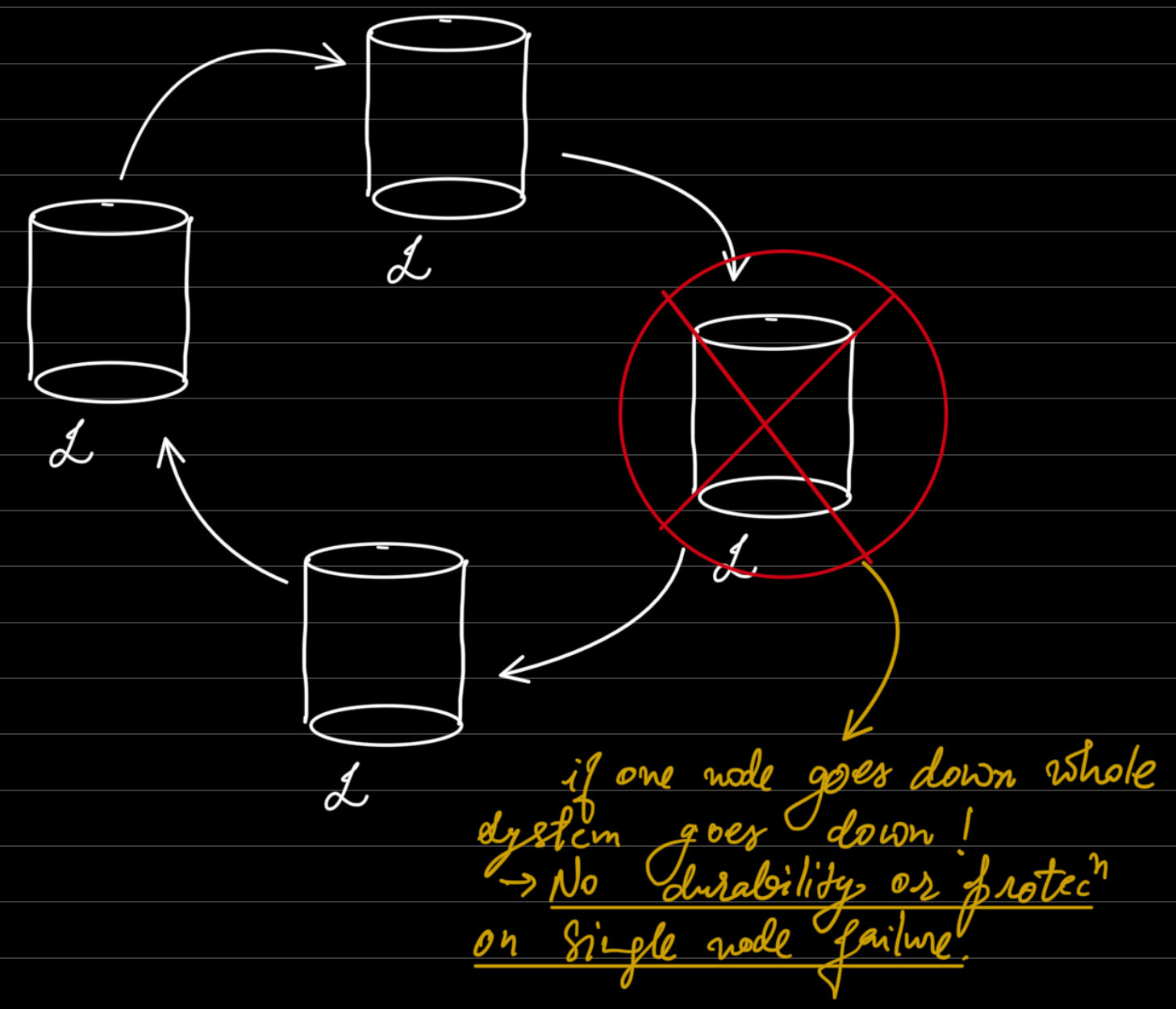
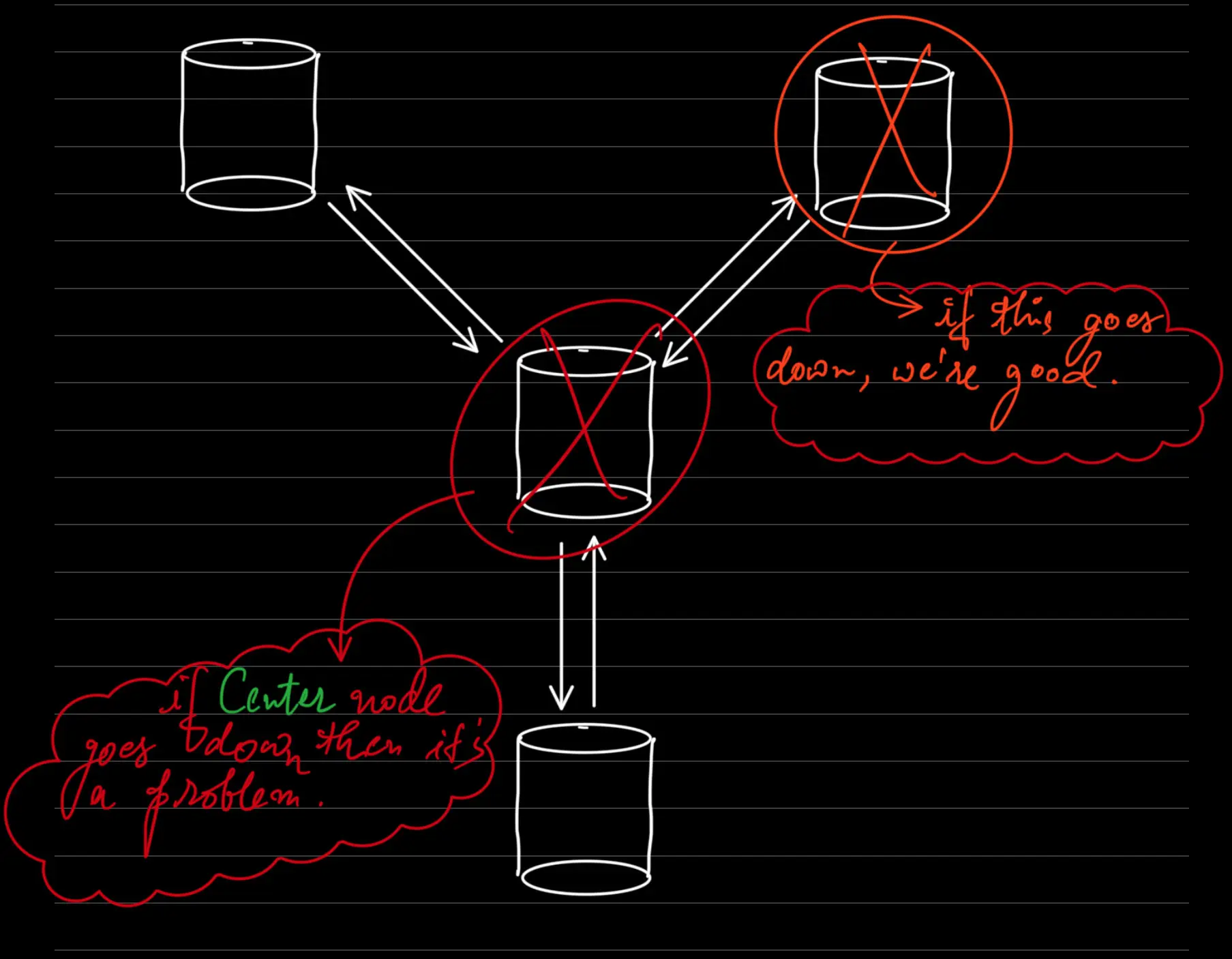
- Leaders forward writes in circle, star, or all-to-all topologies; each needs loop-suppression via a "seen by" set in the replication log.
- All-to-all scales worst: O(N²) connections, high bandwidth, quadratic management complexity.
- Async multi-leader means temporary inconsistency and frequent concurrent-write conflicts needing LWW or custom resolution.
- The note's verdict: great for latency, chaotic for consistency — conflicts get their own follow-up note.
Multi-Leader Replication
As an alpha sigma Male myself, not a big fan of having multiple leaders. Clearly, such a setup is destined to fail and has many problems with it, as you'll see in the following article.
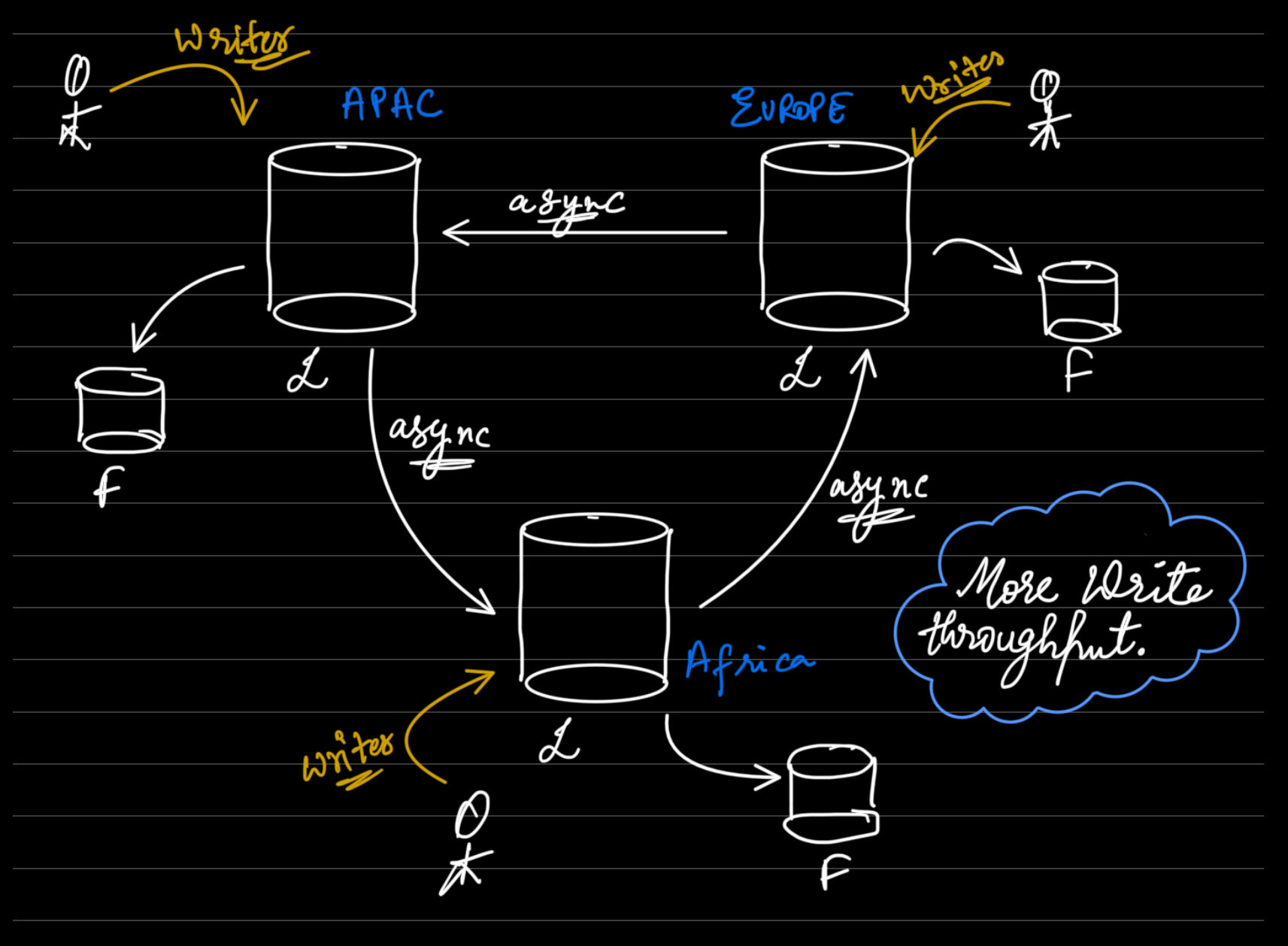
- Anyone can write to any Leaders and they can write anything and we can read from followers to which the writes will be propagated asynchronously.
- The guy in Europe doesn't have to write all the way to Africa or APAC.
Configurations where Leaders can pass their writes from one to another.
Topologies:
-
Circle Topology:
-
Start topology
-
All to All Topology
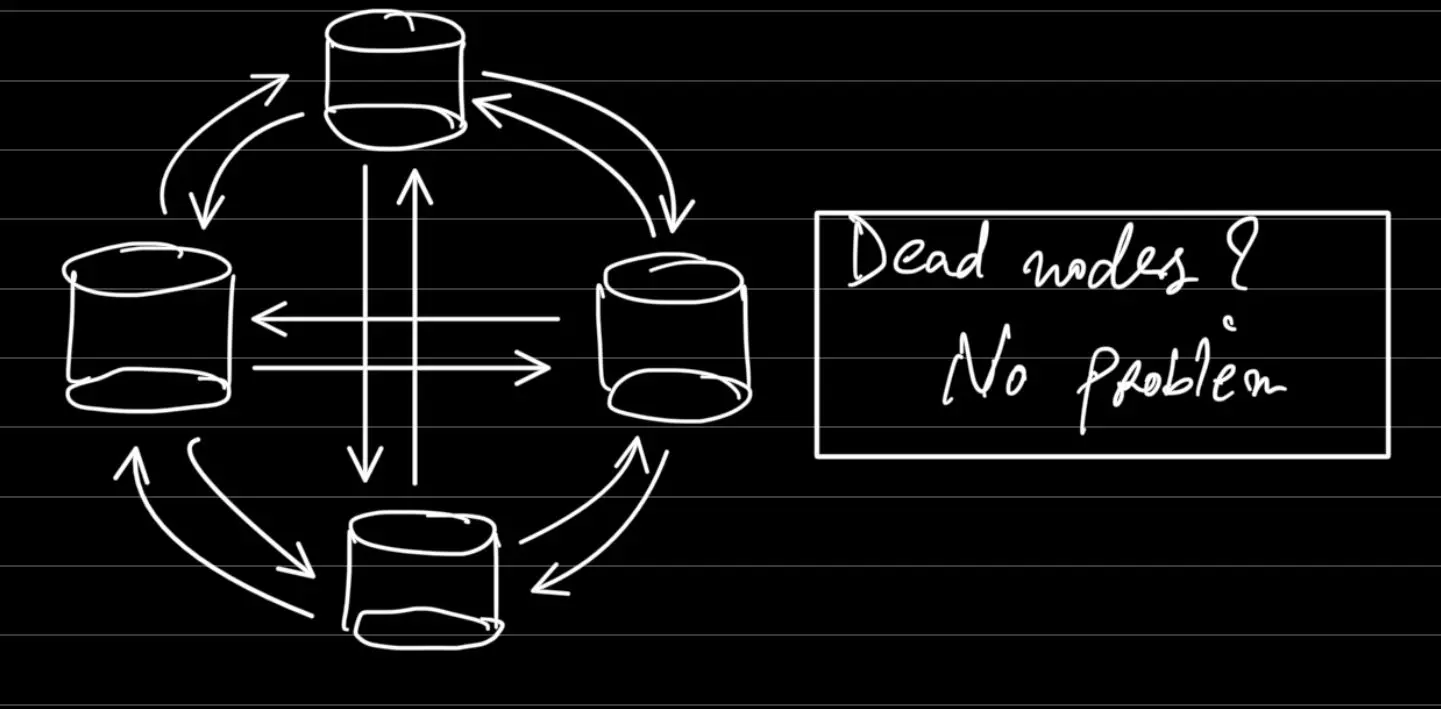
Disadvantages of All-to-All Topology
-
Network Overhead:
- High network traffic due to each node needing to communicate with every other node.
- This can lead to significant bandwidth usage and increased latency, especially in large systems.
-
Complexity:
- Managing a large number of connections becomes complex and error-prone.
- More sophisticated conflict resolution mechanisms are needed to handle concurrent writes and ensure data consistency.
-
Scalability Issues:
- As the number of nodes increases, the number of connections grows quadratically (N*(N-1)/2).
- This limits the scalability of the system and can lead to performance bottlenecks.
-
Conflict Resolution:
- Increased likelihood of conflicts due to simultaneous writes on different nodes.
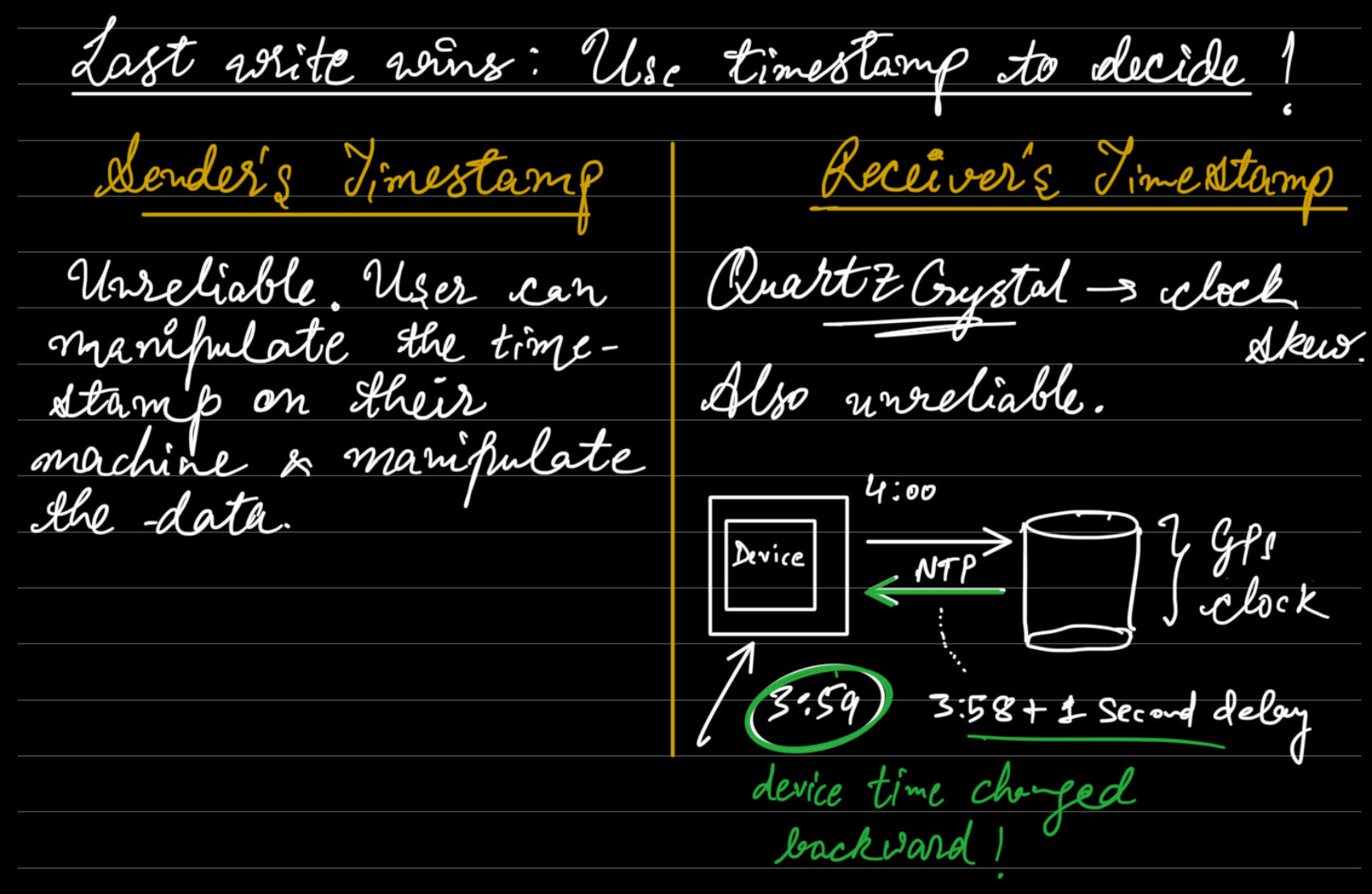
- Requires robust conflict resolution strategies (e.g., Last Write Wins, custom resolution logic) which can be difficult to implement effectively.
-
Data Consistency Challenges:
- Ensuring data consistency across all nodes is challenging due to the asynchronous nature of replication.
- Temporary inconsistencies can arise, making it difficult to provide strong consistency guarantees.
Modifying the Replication Log:
| Before (in Replication Log) | After (add this) |
|---|---|
| id: 5, key: Jordan, value: sexy | Seen by: 1, 3, 5 --> (which replicas has seen this write? Don't want to duplicate!!) |
| To keep track of this write as it goes to a specific node, we can add that in our replication log that this write was seen by that specific DB node. | |
| This will ensure that our systems are not sending the writes infinitely in all the directions if we know that this write has been seen by these many DB nodes. |
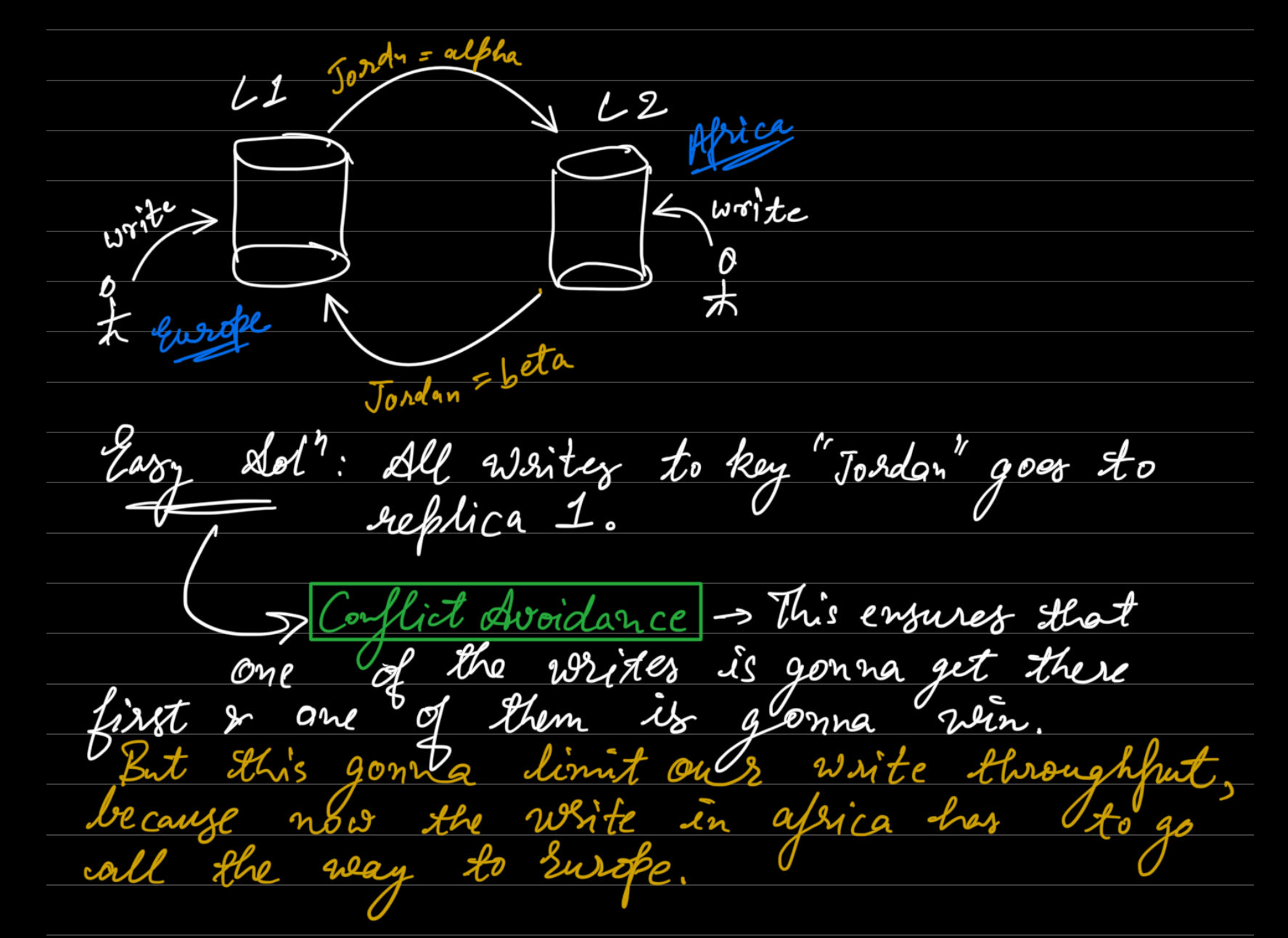
Write Conflicts:
Trade-offs
| Approach | Pros | Cons | Use when |
|---|---|---|---|
| Circle topology | Few connections per node, simple forwarding | Slow propagation; one break stalls the ring | Few datacenters in a ring |
| Star topology | Central coordination, simple routing | Center is a bottleneck and single point of failure | Small hub-and-spoke deployments |
| All-to-all topology | Fastest propagation, no single relay | O(N²) connections, bandwidth burn, hardest conflict resolution | Small clusters that need fast fan-out |
| Replication-log "seen by" tracking | Stops infinite rebroadcast and duplicates | Extra metadata per write | Any multi-leader forwarding setup |
Interview One-Liners
Q: What is multi-leader replication's headline benefit? A: Local writes at every region — a European client doesn't round-trip to Africa or APAC.
Q: Name the three leader-to-leader topologies. A: Circle, star, and all-to-all.
Q: Why does all-to-all scale poorly? A: Connections grow as N·(N−1)/2 with high bandwidth use, management complexity, and more concurrent-write conflicts.
Q: How does the note stop writes looping forever? A: By tagging each replication-log entry with a "seen by" replica set so nodes don't resend duplicates.
Q: Why are conflicts inherent here? A: Asynchronous replication lets two leaders accept simultaneous writes with no natural order, forcing LWW or custom resolution.
Q: When would you still pick multi-leader? A: Geo-distributed writes where local latency and write availability outweigh consistency pain.